

Texas Drought Sets A Record $5.2 Billion In Ag Losses
The blistering drought in Texas has caused an estimated $5.2 billion in crop and livestock losses this agricultural season, a record figure that could still rise, state officials said.
AgriLife Extension Service economist David Anderson said field surveys from November 2010 to August 1 this year indicate livestock losses of $2.1 billion and crop losses of $3.1 billion in the state. By the time crops are done being harvested, it might be more. The previous record annual loss was $4.1 billion for the 2006 growing season, Texas agricultural officials said.
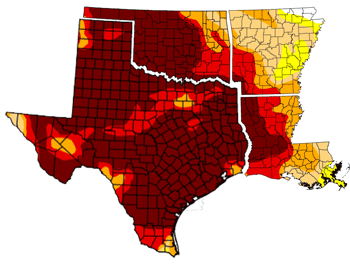 This year, drought has spread over much of the south, leaving Oklahoma the driest it has been since the 1930s and setting records in Louisiana. But the situation is especially severe in Texas, which is the nation’s second-largest agriculture state behind California.
Texas leads the nation in cotton and cattle production. But some parts of Texas haven’t had rain since last fall, and forecasters predict Texas’ drought will persist through at least September. The crop losses include cotton, corn, wheat, sorghum and lost hay production. The estimates do not include those from fruit and vegetable producers, horticultural and nursery crops, or other grain and row crops. Since 1998, not including numbers from this crop year, drought has cost Texas agriculture $13.1 billion.
Texas’ economy will take a direct hit from the losses. Agriculture accounted for $99.1 billion of Texas’ $1.1 trillion economy, or 8.6%, in 2007, the most recent year data on food and fiber was available from the extension service. Losses in that sector have a ripple effect that’s about twice the amount of the actual agricultural loss.
Texas is in its most severe one-year drought on record. The state would need more than 4.5 inches of rain in the next two months to avoid breaking the 1956 record for driest 12 consecutive months. Some scientists and climatologists say the drought may even extend for another year because there is a 50/50 chance the La Nina conditions in the equatorial Pacific Ocean will return this fall. La Nina is a phenomenon of a cooling of the tropical Pacific Ocean and typically results in less rain for southern states. The strong La Nina of 2010-2011 is believed to have caused this summer’s devastating drought. ♦