

Uncertainty & Year End Tax Planning
While ag headlines for the most part remain upbeat, the last month of 2012 continues to hold uncertainty for members trying to make year end tax decisions, most of it tied to unknown 2013 U.S. tax laws.
Pete Davis, president of Davis Capital Investment Ideas, has worked for Democrats and Republicans on Capitol Hill, serving as an economist for the Joint Committee on Taxation and the Senate Budget Committee. Davis believes that despite what the optimists say, it’s too early to count on a fiscal cliff deal. Writing for CNNMoney, Davis, provides a short list of reasons why he believes the fiscal cliff won’t get resolved easily.
- Obama insists on a tax rate increase on those earning $250,000 or more, and House Republicans balk.
- Obama and Democrats refuse to accept revenue increases that depend upon tax reform and/or upon an assumed increase in economic growth.
- Republicans won’t accept another extension of the temporary 2% payroll tax cut or Obama may insist on a Making Work Pay tax credit.
- House Republicans insist on entitlement cuts that Senate Democrats won’t accept. Senate Democrats see Social Security as completely off the table, and Medicare cuts will be difficult to achieve because most of the easier ones were used to pay for health care reform.
- Democrats want bigger defense cuts than Republicans will accept.
- Discretionary spending can be shaved a bit more, but not much more without incurring Democratic opposition.
- Republicans may refuse to accept a debt ceiling increase that is not “paid for.” A one-year hike would cost about $1.2 trillion. There’s no way they could pay for that.
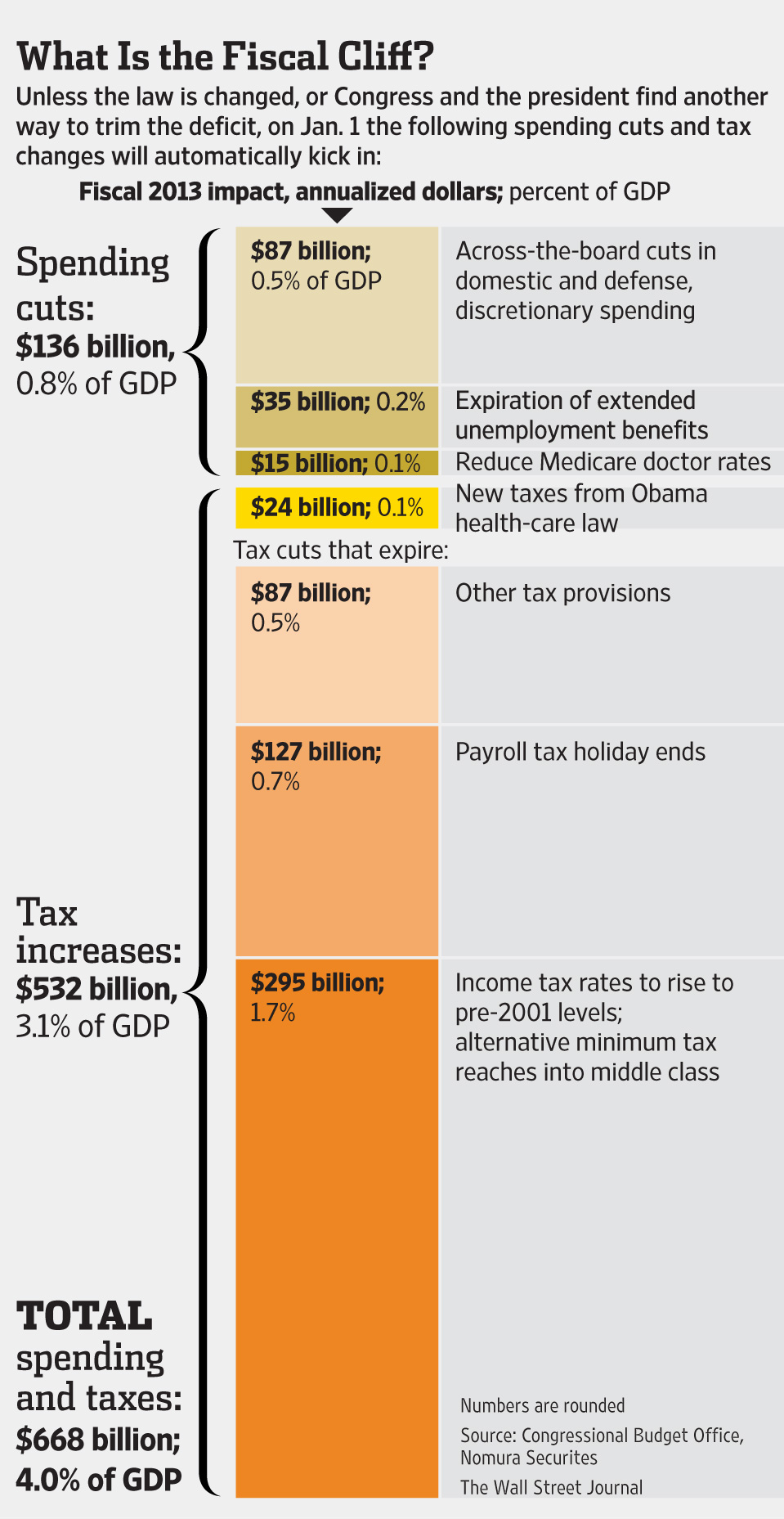 While Davis is not ruling out a deal before Christmas, he believes there is a 60% chance of failure to deliver even a very modest “down payment” deal before Christmas.
Regardless of what lawmakers do with the tax extenders for this year or the Bush tax cuts for 2013, there are moves that you can make between now and December 31 that will save you and your business. Below is the advice from Kiplinger’s tax experts.
Acquire Needed Business Assets: In lieu of depreciation, businesses right now can claim an immediate write-off of up to $139,000 of the cost of new or used assets placed in service in 2012. The $139,000 ceiling is reduced dollar for dollar after more than $560,000 of assets are put into use this year. Without congressional action, next year businesses can expense only up to $25,000 of acquired assets. Buying assets and placing them in service this year also allows the use of bonus depreciation. This tax break ends after 2012 and is unlikely to be extended.
Buy A Vehicle: The maximum deduction for cars acquired and placed in use in 2012 is $11,160. After December 31, the cap falls to a little more than $3,000. Remember that large SUVs and pickup trucks offer additional tax benefits.
Shift Income & Expenses: High-income professionals may want to accelerate billings to report income in 2012 to lock in the 35% top individual income tax rate. The same applies to bonus payments. Business owners can pay year-end bonuses in 2012 if they want the deduction sooner or they want to ensure that the bonuses are taxed at the 2012 rates.
Take Dividends In Lieu Of Salary: Consider having your corporation pay dividends instead of salary. This works out tax-wise if the corporation is in a low tax bracket and the shareholder is in a high bracket. Although payment of dividends does not give rise to a corporate deduction, the owner’s tax savings upon receipt of a dividend can exceed the benefit of the corporation’s forgone deduction in some cases. This is due both to the 15% maximum dividend rate for 2012 and the fact that dividends are not subject to payroll tax. This tax tip does not work for personal service firms that pay a flat 35% tax or for S corporations.
No matter what Congress and the President do with the Bush tax cuts for next year, the maximum tax rate on dividends received by high-incomers is going up in 2013 on account of the 3.8% Medicare surtax. Link to Kiplinger Tax Advice