

Health Care Changes Means More Part Time Employees?
Beginning in 2014, some small companies will have to provide health insurance for their employees, or face some stiff consequences under the new health reform law, commonly known as “Obamacare.” Specifically, any company with 50 or more full-time workers that does not provide health benefits could face fines of between $2,000 and $3,000 per employee for all but 30 of its full-timers, according to Entrepreneur. Even part-timers who work 30-hour-a-week jobs are counted toward that final tally of 50.
To skirt the 50-employee rule, small companies might consider moving away from full-time work forces. Already, some advisers say they’re seeing that happen. “Small-business owners are concerned about the mandate for health-care coverage, or the fine they would be charged, so they’re hiring part-time workers and keeping them for less than 30 hours a week,” says Brian Miller, chief operating officer of AdviCoach and The Entrepreneur Source, Southbury, CN-based companies that advise small businesses.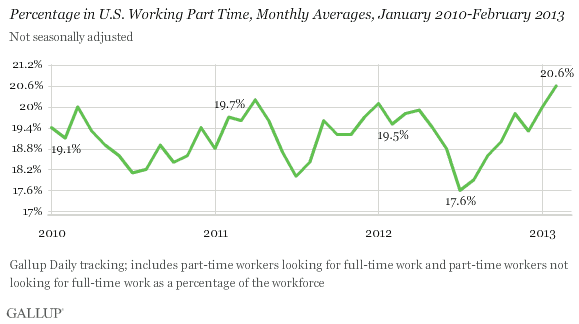
According to a Gallup poll released in March, the proportion of the U.S. workforce comprising part-timers hit 20.6% in February—a slight 1.5% percentage point increase from 2010. When does a part-time staff make sense?
For some types of companies, it can be a good strategy to hand over non-core functions to part-timers, says Nancy Mobley, founder and CEO of Insight Performance, a human-resources consulting firm in Dedham, MA. A high-tech, venture-backed company might hire part-time legal experts, bookkeepers or HR people, says Mobley. “It’s a way to focus on their core business without having to worry about the overhead.”