

EPA Sides With Oil Producers On Renewal Fuel Standard
The Environmental Protection Agency (EPA) dropped the bad news for corn farmers with a recent release of the Obama administration’s proposed 2014 renewable fuel standard (RFS), revising the total renewable volume obligations downward for the first time. The 2014 mandate proposes a range of 15 billion to 15.52 billion gallons of biofuels to be added to the U.S. fuel supply next year, with a recommended target of 15.21 billion gallons within that range.
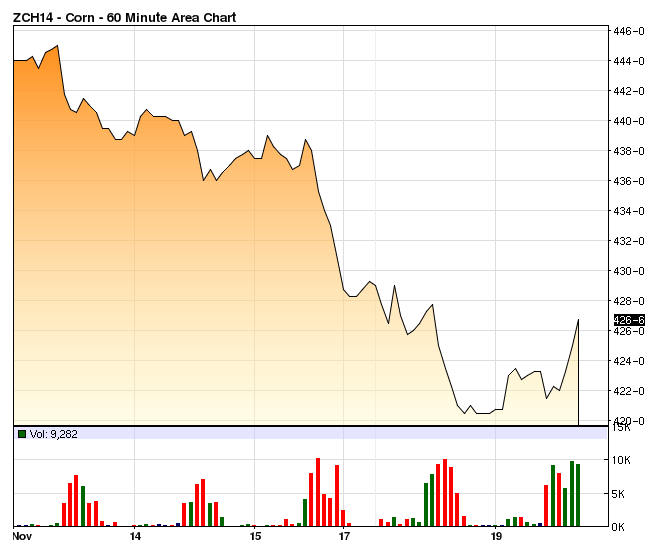 The target number, if it becomes law, would be a reduction of nearly 3 billion gallons relative to the statutory requirement for 2014 of 18.15 billion gallons.
It also proposes a range of 2 billion to 2.51 billion gallons of advanced biofuels with a recommended target of 2.2 billion gallons. The range falls below the proposed target of 3.75 billion gallons under the Energy Security and Independence Act of 2007. Biofuels makers and producers are not pleased and they’re united about who’s to blame — the oil industry.
“EPA’s proposal fundamentally betrays this administration’s commitment to clean renewable fuels and caves to big-oil demands,” said Brian Jennings of the American Coalition for Ethanol. Added Renewable Fuels Association President Bob Dinneen, “Last time I checked, the oil companies were doing pretty good on their own.”
The American Soybean Association (ASA) responded to the EPA proposal with the following quote, “The level set forth in the proposal is unnecessarily low and will stifle the growth and job creation potential demonstrated by the biodiesel industry over the past several years.”
The National Corn Growers Association struck a similar tone, “This recommendation is ill-advised and should be condemned by all consumers because it is damaging to our tenuous economy and short-sighted regarding the nation’s energy future,” said NCGA President Martin Barbre. “Agriculture has been a bright spot in a failing U.S. economy, but current corn prices are below the cost of production. EPA’s ruling would be devastating for family farmers and the entire rural economy.”
“Ethanol and the RFS have been a great success story. Now, the EPA is sending a terrible message that we no longer have a long-term energy policy for biofuels, which was the original intent of this forward-thinking legislation. The Administration has clearly backed away from their commitment to renewable energy and this proposal blatantly contradicts the President’s Climate Action Plan,” Barbre said. “The goal of the RFS is to reduce our dependence on imported oil to make our country more energy independent and more secure. It has done that while also revitalizing rural America.”
The Illinois Farm Bureau hit back with, “EPA’s action is not about the inability of oil companies to blend anymore ethanol into unleaded gasoline. Instead, it appears to be a response to the industry’s well financed public relations and lobbying efforts and reflects the administration’s capitulation to the oil companies’ unwillingness to blend any more lower cost ethanol.
Although acknowledging that the EPA did take a step toward addressing its concerns, the oil industry is still calling for the renewable fuel standard to be scrapped. Once the rule is published in the Federal Register there will be a 50-day public comment period. The agency is expected to finalize the rule by next spring.
A coalition of 21 ag groups, including the National Cattlemen’s Beef Association, said, “We appreciate this action as it acknowledges a problem exists with the current policy. The inflexible RFS mandate continues to have a detrimental impact on the economy and makes feeding animals risky because our industries are not competing on a level playing field.”