Pessimism Persists Among Small Businesses, Says NFIB Poll
Small business optimism continues its winter hibernation, with the latest Index dropping 2.7 points to 91.4, a reading historically associated with recessions and periods of sub-par growth, according to a recent report by the National Federation of Independent Businesses (NFIB).
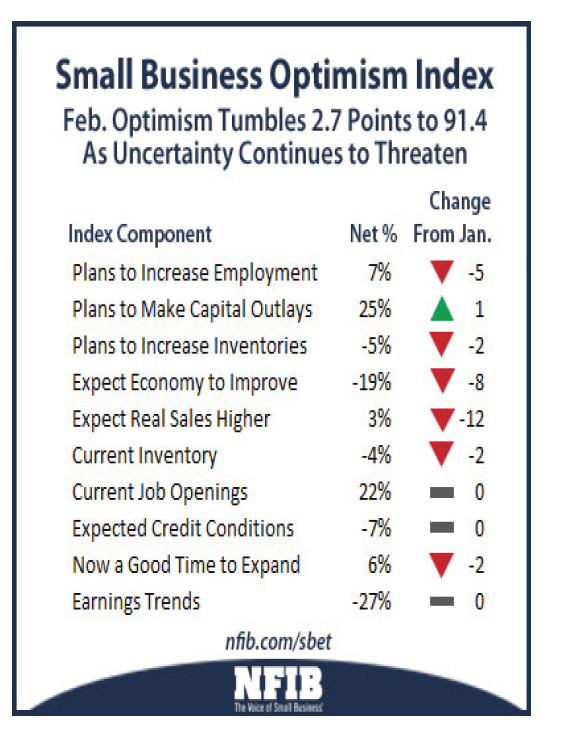 The results of a February survey of NFIB members revealed a reversal in a January measure that ends a three-month improvement trend. Only one Index component improved, three were unchanged, and six fell, indicating that the small-business half of the economy is still adding little to growth beyond that needed to support population growth. The Index’s substantial decline is consistent with the prospect that GDP growth will remain in the mid-2% range, barring some exceptional good news, which is unlikely in this election year.
“The one highlight in the January survey, a surge in hiring plans, was crushed in February by the wintry recovery now in its fifth year,” said Bill Dunkelberg, NFIB Chief Economist. The February report on net new jobs was better than expected, but did not reduce the unemployment rate, which rose one-tenth of a point.
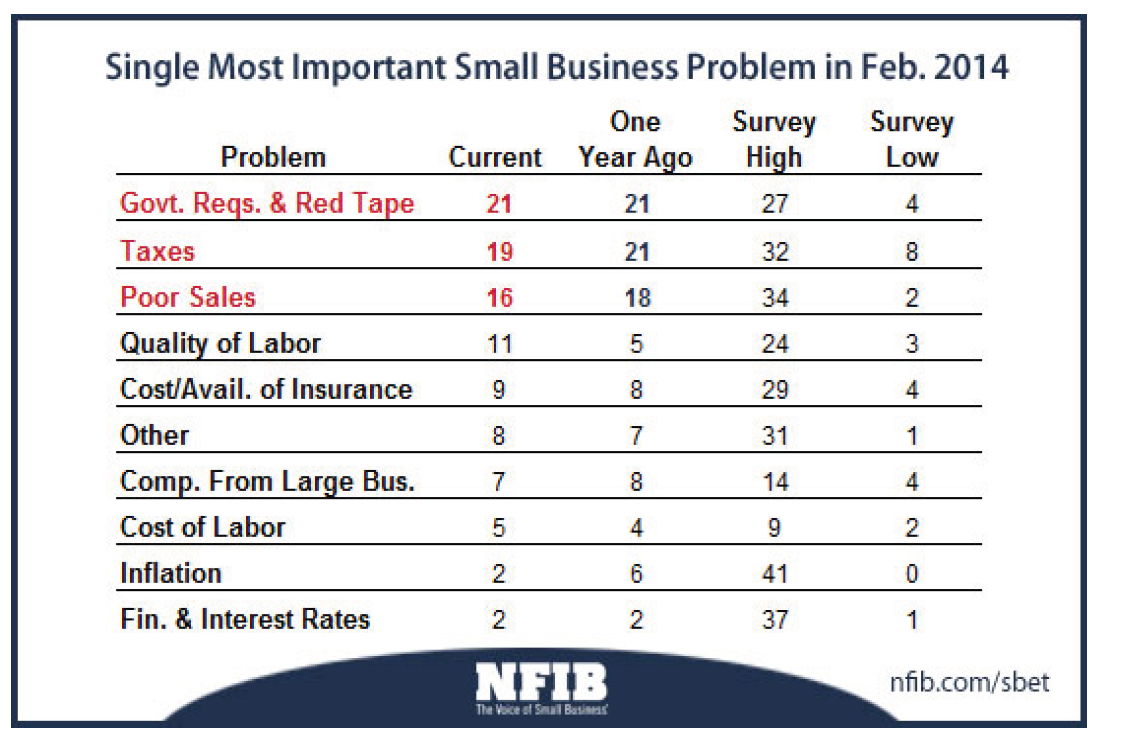
“Uncertainty is a major cause of the reluctance to spend and hire,” Dunkelberg said. “Large firms are loaded with cash but unwilling to spend. For small firms, record low numbers report the current period as a good time to expand.” He added that more firms are reducing inventory than adding to it, and more firms expect the economy to deteriorate than to improve. In NFIB’s Problems and Priorities survey, uncertainty about the economy and government policy both rank in the Top 5 most severe problems facing small-business owners.
Inventories and Sales
The net percent of all business owners reporting higher nominal sales in the past three months compared to the prior three months improved 2 points to a net -8%, typical of the 2013 experience. Sixteen percent cite weak sales as their top business problem, still above levels experienced in “normal” times. The net percent of owners expecting higher real sales volumes plunged 12 points to 3% of all owners, reversing previous gains.
The pace of inventory reduction continued, with a net -2% of all owners reporting growth in inventories, two points lower than January. The net percent of owners planning to add to inventory stocks fell 2 points to a net -5%, indicating little appetite to add to stocks in the current environment.
Inflation
Fifteen percent of NFIB owners reported reducing their average selling prices in the past three months (up 2 points), and 19% reported price increases (up 2 points). Seasonally adjusted, the net percent of owners raising selling prices was a net 1%, down 1 point. Twenty-seven percent plan to raise average prices in the next few months (up 2 points), and 3% plan reductions (unchanged).
Earnings trends were stable at net -27% (net percent reporting quarter to quarter earnings trending higher or lower).