

Presidential Candidates on Trade, Globalization
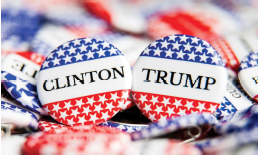 In this final installment in a series exploring the presidential candidates’ positions on economic issues, we look at trade and globalization.
The 2016 election has kicked off the rawest debate in decades over trade agreements, globalization and the impact of lower tariffs and more open borders on U.S. workers and their wages.
Both Trump and Clinton oppose the 12-nation Pacific trade deal, negotiated and promoted by the Obama administration, but they have also questioned the two-decades-old North American Free Trade Agreement, or NAFTA.
Trump –
Trump has upended the Republican policy of recent decades by rejecting free trade and backing tariffs to protect American industry from what he calls unfair competition. He has sought to link Clinton to the 1994 Nafta deal with Mexico and Canada that her husband signed, and he has challenged her to categorically rule out support for the Trans-Pacific Partnership (TPP) agreement in any form.
His strong opposition to trade deals has led to clashes with the U.S. Chamber of Commerce—the biggest business lobby—and brought him closer to liberal economists and Democratic lawmakers on the issue. Still, some economists warn his threats of tariffs could hurt American industries that depend on international supply chains, and potentially kick off a trade war that dents economic growth.
Clinton –
In a campaign season replete with trade skepticism, Clinton announced in October, before the text of the TPP was released, that she wouldn’t support the Pacific trade agreement. As secretary of state, she had previously touted the TPP as the “gold standard,” and Trump has speculated Clinton could eventually sign the TPP in modified form if elected president.
In drafting the party’s policy platform in July, Democrats decided to eschew explicit opposition to TPP. Clinton’s more nuanced approach to trade could win her some support from the business community and the more centrist voters who see the benefits of opening up to other economies. But she also risks alienating supporters of Vermont Sen. Bernie Sanders, her Democratic rival who ran a campaign nearly as antithetical to trade agreements as Trump’s.
Source: Wall Street Journal