

Study: Midwest Storms Nearly as Costly as Hurricanes
Risk to U.S. property from thunderstorms is as high as the risk from hurricanes, according to research recently released.
From 2003 to 2015, the average annual loss from severe convective storms was $11.23 billion. From hurricanes, the annual loss was $11.28 billion, according to a report compiled by Columbia University and published by the reinsurance division of London-based Willis Towers Watson P.L.C.
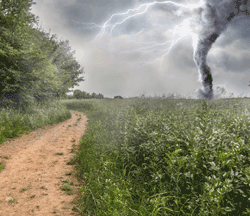 The risk of severe convective storms was the largest annual aggregated risk peril to the U.S. insurance industry over the past decade, the report said.
A convective storm can produce tornadoes as well as large hail, strong winds, and heavy rain leading to flash flooding.
The frequency of severe convective storms in the U.S. is higher following La Niña and lower following El Niño, according to the report. El Niño events are characterized by warmer-than- usual sea surface temperature in the eastern and central tropical Pacific. La Niña events are characterized by cooler-than-usual sea surface temperature. Roughly half of all years are classified as either El Niño or La Niña. The other half are considered neutral.
“Regional variability in increased or reduced severe convective storm frequency due to the El Niño Southern Oscillation phase can have a significant impact on regional and single-state property insurance companies,” said Prasad Gunturi, executive vice president at Willis Re.
Using data from Columbia researchers, Willis Re now plans to produce monthly forecasts of tornado and hail activity that can help companies identify a month in advance what exposure concentrations may be at increased risk to tornado and hail storms compared to historical average activity.