

NAFTA Negotiations Begin, Trump Not Optimistic
The United States last week laid down a tough line for modernizing the North American Free Trade Agreement (NAFTA), demanding major changes to the pact that would reduce U.S. trade deficits with Mexico and Canada and increase U.S. content for autos.
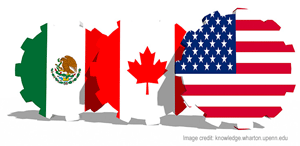 President Trump said at a rally in Phoenix on Tuesday that he may scrap the pact with Mexico and Canada to jumpstart negotiations.
Speaking at the start of the talks in Washington, U.S. Trade Representative Robert Lighthizer said NAFTA had “failed many, many Americans.”
“We need to ensure that the huge trade deficits do not continue and we have balance and reciprocity,” Lighthizer said. “The rules of origin, particularly on autos and auto parts, must require higher NAFTA content and substantial U.S. content.”
Canada’s Foreign Minister and lead NAFTA negotiator, Chrystia Freeland, took a swipe at the U.S. position on the need to shrink the U.S. trade deficit.
“Canada does not view trade surpluses or deficits as a primary measure of whether a trading relationship works,” she said in her opening statement. “Nonetheless, it’s worth noting that our trade with the U.S. is balanced and mutually beneficial.”
Mexican Economy Minister Ildefonso Guajardo said the aim of the talks should not be to tear up NAFTA but to forge a stronger deal.
“For a deal to be successful, it has to work for all parties involved,” he said. “Otherwise, it is not a deal.”
Trump has said NAFTA has led to the shutdown of U.S. factories and sent U.S. jobs to low-wage Mexico, a point that Lighthizer also emphasized in his opening remarks. The test will be whether negotiators can prove that a new NAFTA agreement can alter that course.
The call from the U.S. business community in the run-up to the talks has been “do no harm” amid concerns that a new agreement will unravel a complex North American network of manufacturing suppliers built around NAFTA.
U.S.-Canada-Mexico trade has quadrupled since NAFTA took effect in 1994, surpassing $1 trillion in 2015.
Derek Burney, a former Canadian ambassador to Washington who was involved in the first NAFTA negotiations, said that in the previous NAFTA talks there was a political commitment from all sides to reach a deal. That is not the case now, he said.
Also weighing on the talks is the upcoming 2018 presidential election in Mexico. The country has urged all sides to complete the negotiations before the campaigns ramp up in February to avoid it becoming a political punching bag.
Source: Reuters