

Study Suggests Wearable Tech Reduces Injury
Wearable technology in the workplace can reduce injuries and increase productivity, according to a study conducted by the American Society of Safety Professionals (ASSP) Foundation.
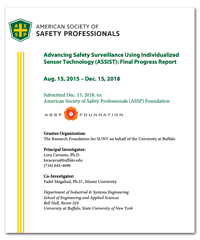 The ASSP conducted a three-year study which demonstrated how to capture a worker’s safety performance and translate the data into personal fatigue levels. It was the first step in creating a framework to identify research-supported interventions that protect workers from injuries caused by being tired on the job.
“Fatigue is a hidden danger in the workplace, but now we’ve tackled the measurement and modeling of fatigue through wearable sensors, incorporating big data analytics and safety engineering,” said Lora Cavuoto, a reseacher from the University at Buffalo who led the study with a colleague from Miami University of Ohio. “Information is power, so knowing when, where and how fatigue impacts worker safety is critical. You can’t identify solutions until you pinpoint the problems.”
According to the National Safety Council, fatigue costs U.S. employers more than $130 billion a year in health-related lost productivity. In addition, more than 70 million Americans suffer from a sleep disorder. A typical U.S. company with 1,000 employees can expect to lose more than $1 million each year to fatigue, which can often increase the workloads of other human operators. This phenomenon has been reported in advanced manufacturing, warehousing, truck driving, construction and other occupations.
Source: ASSP