

AGCO Among First Manufacturers to Use Holograms
The future of data visualization is unfolding on the factory floor of AGCO Corp., a development featured recently on the pages of the Wall Street Journal.
Workers at the company’s plant in Jackson, Minn., are using augmented-reality glasses that display diagrams and images of instructions to help them conduct quality checks on tractors and chemical sprayers.
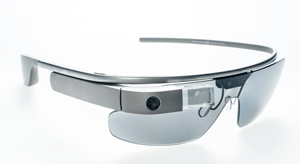 Peggy Gulick, AGCO’s director of business-process improvement, said the technology has led to a 20 percent increase in the speed at which quality checks are logged.
Next, AGCO will experiment with computer-generated hologram-like images, using the three-dimensional images to help guide workers through the process of welding 30-foot booms to chemical sprayers.
The use of augmented reality (AR), which superimposes digital content, including hologram-like images, onto a user’s view of the real world, is in the earliest stages of commercial development. But researchers at the Massachusetts Institute of Technology (MIT) say improvements in
the performance of AR equipment, like the Microsoft HoloLens, and expected reductions in its cost, will help drive the technology into the mainstream, specifically in the supply chain.
Early versions of AR are being used by large corporations today, and analysts pre-
dict its uses will increase sharply. About 14.4 million U.S. workers will use “smart glasses,” such as Google Glass and HoloLens, in 2025, up from 400,000 this year, according to Forrester Research Inc.
Large companies will spend $3.6 billion on smart glasses in 2025, up from $6 million in 2016, according to Forrester. The global 3-D imaging market, which includes holograms, is expected to grow from $4.9 billion in 2015 to $16.6 billion by 2020, according to Markets and Markets, a research firm in India.
To gain an edge over competition, companies are experimenting with early versions of AR in the supply chain.
AGCO’s Gulick said holograms and touch-screen walls could display data on heat and vibration speed of each machine her workers use to cut, weld and paint components. Visualizing her supply-chain data could be immensely helpful in easily preventing costly disruptions at her factory, because right now, that data is buried in computers.
“Getting that data is not as hard these days as making sense out of it for the people that need it to make decisions,” she said.
Beginning this month, workers at a General Electric Co.’s Oil & Gas turbo-
machinery facility in Florence, Italy, will use AR that superimposes visuals needed to collect more than 100 precise measurements in the manufacturing of gas turbine nozzles. The AR is expected to be applied in factories at GE’s Power and Aviation businesses later this year.
At Boeing Co.’s pilot program at the Electrical Strategic Fabrication Center in Mesa, Ariz., Google Glass is being used to help guide mechanics in the assembly of complex wiring that connects electrical systems in airplanes. Instead of following instructions on paper or laptops, mechanics wear a Google Glass headset that shows digital images of diagrams and text with instructions on where to place the wires. Boeing reported that the system cut production time by 25 percent and reduced errors to zero. Source: Wall Street Journal