

Canadas Canola Farmers Hit by Trade Dispute with China
China has abruptly retreated from the canola market in Canada. The Asian country last month banned imports of the seed from Canada amid a diplomatic row over the arrest of an executive from Huawei Technologies.
Canola producers and shippers estimate Canada’s canola production could drop about 10 percent this year, reversing a decade of booming growth for the world’s largest producer and exporter of canola, which is primarily used to make vegetable oil.
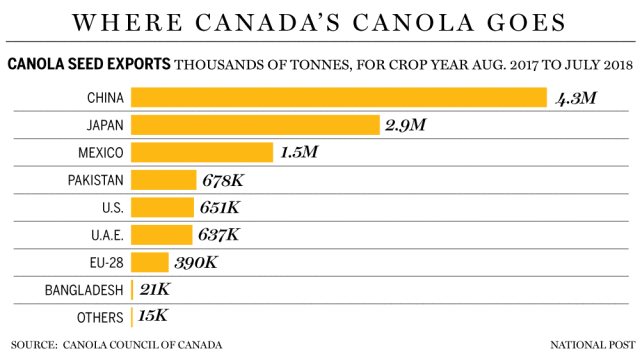
Canada’s canola output surged more than 60 percent in the past decade to 20.3 million metric tons as of 2018. China drove much of that growth by steadily expanding orders, accounting last year for 40 percent of Canada’s 11 billion Canadian dollars (U.S. $8.62 billion) of canola exports. Canada sells about half of its canola to foreign buyers.
China halted canola shipments from two of Canada’s largest grain shippers last month, citing the discovery of harmful organisms in canola-seed imports.
Canadian regulators said they have found no evidence of contamination, and shippers and farmers have instead linked the ban to the December arrest in Vancouver of Meng Wanzhou, chief financial officer and daughter of the founder of Huawei. Canadian officials arrested Meng after the U.S. requested her extradition for her alleged violation of U.S. sanctions against Iran. She remains in Vancouver on bail.
A spokesman for China’s foreign ministry defended the suspension of Canadian canola import licenses as “legitimate, reasonable” steps to protect Chinese consumers and agricultural security.
Canadian canola is the latest farm export to be buffeted by geopolitical tensions with China.
Source: Wall Street Journal