

Farmers Could Receive Financial Relief as Early as Mid-September
The Trump administration pledged this week to pay farmers $4.7 billion to offset losses from trade disputes with foreign buyers of U.S. agricultural products.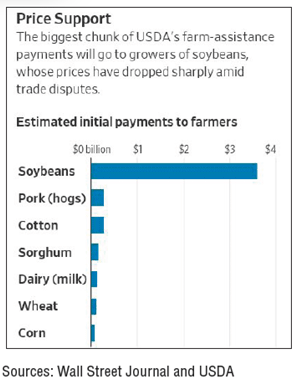
Agriculture Secretary Sonny Perdue said the payments would help protect farmers from “unjustified tariffs” some nations have applied in response to President Trump’s trade policies.
The USDA said it would begin implementing the plan by Sept. 4, with payments to pork, dairy and wheat producers potentially en route to farmers as early as mid-September.
Perdue said the payments would soften the blow to farmers while the Trump administration negotiates deals that benefit the U.S. economy overall, including agriculture. Farmers “cannot pay their bills with simple patriotism,” he said.
“Our farmers work hard and are the most productive in the world,” Perdue said, “and we aim to protect them.”
Some farm groups said the spending won’t make up for losses.
The National Corn Growers Association estimated lower prices as a result of tariffs will cost growers more than $6 billion this year. The direct payment program allocated $96 million for corn growers.
“This plan provides virtually no relief to corn farmers,” said Kevin Skunes, a North Dakota farmer and the NCGA’s president.
Soybean farmers are in line to get roughly three-fourths of the direct payments, or $3.6 billion, followed by producers of pork, cotton, sorghum, dairy and wheat.
Pork products will benefit the most from a second form of assistance, which will buy excess commodities—$558 million out of an estimated $1.2 billion. The USDA will also purchase roughly $90 million each of apples, dairy products and pistachios among the more than two dozen products targeted.
USDA officials said they could decide by December to make a second wave of direct payments to farmers if damages from trade penalties persist.
USDA’s “tariff mitigation plan falls far short of addressing the losses dairy producers are experiencing,” said Jim Mulhern, chief executive of the National Milk Producers Federation. The group estimated the $127 million allotted to dairy represented less than 10 percent of what producers have lost during recent trade disputes.
Some lawmakers also are skeptical. “No farmer is going to come close to being made whole by anything that USDA has proposed as a response to the decrease in price due to trade restrictions,” said Sen. Roy Blunt (R., MO). “Farmers have to hope that the government continues to work to open more markets.” Source: Wall Street Journal