

Wearable Technology at Work Offers Possibilities, Risks
Wearable technology has advanced from simply storing data to helping prevent or reduce workplace accidents, and industry analysts say it can provide employers and insurers with important information. The information, however, must be properly stored, processed and protected.
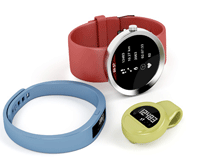 Experts discussed the risks and benefits of wearable technology during Business Insurance’s 2017 Innovation Summit in New York.
A representative from a forensics engineering laboratory said there are 35,000 “struck-by” accidents per year in the United States in construction and manufacturing, which result in 200 fatalities a year.
“So imagine that little device on your wrist would talk to that fork truck or that fork truck driver, and perhaps prevent that injury,” he said. ‘It’s coming, it’s here.”
He noted that the shrinking size of technology is a large factor in the growth of wearables adoption, adding that “your phone has more computing power than NASA’s first space explorations.”
An expert on workers compensation research at Willis Towers Watson said data obtained from wearables is a huge topic for many risk managers, employers and workers compensation coordinators.
“A big area we’ve seen is predictive analytics,” he said, “they love to see some way in which predictive analytics can be implemented to evaluate a safe work environment.”
Wearables also are used to encourage employees to adopt a healthier lifestyle, such as tracking how much they walk, panelists said.
An attorney from a firm in Washington told attendees that with so many uses, the devices are sometimes subject to overlapping regulations. He said wearable devices may need to comply with the Health Insurance Portability and Accountability Act and U.S. Food and Drug Administration regulations.
An employer’s use of the wearable device also must comply with applicable state privacy laws along the rules of the Federal Communications Commission and the Federal Trade Commission.
Source: Business Insurance