

Will AI “Kill Us All”? What Can We Do About It?

by Chris Morbitzer, CEO of NorthBuilt
“The people building AI earnestly believe that it could kill us all by the end of the decade,” claimed Jacob Coxon, former artificial intelligence researcher at Anthropic, on September 8, setting off a global debate on the pace of AI development. His dire warning was amplified later that week when Anthropic’s CEO, Dario Amodei, worried in an essay that in 6–12 months, “a swarm could be capable of taking over the entire internet.”
The public seems to believe it. A Politico poll conducted between September 13–15 found that “about two out of three Americans say there is at least a ‘moderate’ risk that advanced AI could destroy humanity.”
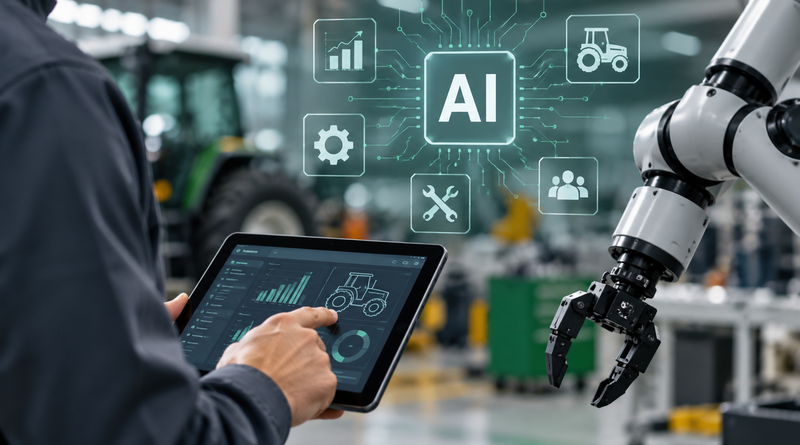
AI is fundamentally changing the nature of most jobs today in the same way the Internet did thirty years ago. Manufacturers are using AI to reduce downtime, improve quality control, and accelerate workforce training. With such clear benefits to AI use today, what’s behind the sudden alarm?
While I don’t doubt that some AI researchers asserting an existential threat to humanity genuinely believe their own claims, it’s also true that AI leaders have their own incentives to amplify them—as many in tech and academia have astutely noted.
As often with emerging technologies, popular fear of AI is rooted in a lack of understanding of the technology itself. In the nineteenth century, many were concerned that steam locomotives would “stop fields from producing, kill trees, and burn villages to the ground.” (source) When we face uncertainty, we naturally fill the void with worst-case scenarios.
At its core, artificial intelligence is powered by the same technology that has existed inside of computers for decades. AI is a tool in the same way that precision sprayers and skid steers are tools. Artificial intelligence is not “intelligent” as we commonly understand that word. “Agentic” systems do not possess actual agency.
There are dangers to AI, but it’s not the existential danger that is getting attention today. The real threats posed by AI (energy consumption, cognitive offloading, and “deepfakes,” to name a few) are best addressed through awareness, education, and public advocacy focused on eliminating or reducing harm. We shouldn’t let hyperbolic warnings of doom distract us from the positive outcomes of AI and the steps that are within our control.
Many manufacturers are already using artificial intelligence to speed up sales quoting, automate parts lookups, and assist with dealer outreach. Working with a trusted technology partner can help you explore where AI can accelerate progress toward your business goals and priorities in the next year. FEMA members can reduce manual or redundant work by registering for an AI Working Session, a complimentary benefit arranged for FEMA members.
Each of us today can take one step to begin using AI safely and effectively. In doing so, we will be able to dispel uncertainty about this technology and harness the benefits that come from using it.
Chris Morbitzer is CEO of NorthBuilt, FEMA’s Preferred Technology Partner. NorthBuilt is a Midwest software and technology advisory firm that works with independent and family-owned equipment manufacturers and their dealers to align their technology with their business goals and priorities. FEMA members can book a complimentary AI Working Session at femaaiworkshop.com or reach Chris directly at chris.morbitzer@northbuilt.com.
NorthBuilt.com | FEMA Member Since 2025
—