

Drug Use In The Workplace Changing
According to a landmark analysis of workplace drug test results released by Quest Diagnostics, drug use among American workers declined dramatically over the past 25 years, although the rate of positive test results for certain drugs, including amphetamine and opiates, continues to climb.
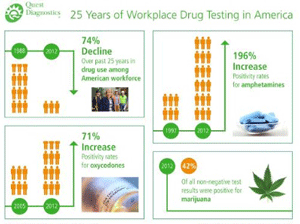 The Drug Testing Index (DTI) analysis examined more than 125 million urine drug tests performed by Quest Diagnostics forensic toxicology laboratories across the U.S. as a service for government and private employers between 1988 and 2012. The analysis examined the annual positivity rate for employees in positions subject to certain federal safety regulations, such as truck drivers, train operators, airline and nuclear power plant workers (federally mandated safety-sensitive workers); workers primarily from private companies; and the results of both groups together.
The index reports the percentage of results that tested positive for the presence of a drug or its metabolite, or an adulterant that involved a specimen that was deemed to be unacceptable for testing (“positivity”). The company’s testing services identify approximately 20 commonly abused drugs, including marijuana, opiates and cocaine.
Key findings from the analysis:
-
The positivity rate for the combined U.S. workforce declined 74%, from 13.6% in 1988 to 3.5% in 2012.
-
The positivity rate for the federally-mandated safety sensitive workforce declined by 38%, from 2.6% in 1992 to 1.6% in 2012. The positivity rate for the U.S. general workforce declined by 60%, from 10.3% in 1992 to 4.1% in 2012.
-
Despite the declines in overall drug use, the DTI analysis also found that the positivity rate for certain segments of drugs has increased.
-
Positivity rates for amphetamines, including amphetamine and methamphetamine, has nearly tripled (196% higher) in the combined U.S. workforce and (in 2012) were at the highest level since 1997. The positivity rate for amphetamine itself, including prescription medications such as Adderall®, has more than doubled in the last 10 years.
- Positivity rates for prescription opiates, which include the drugs hydrocodone, hydromorphone, oxycodone and oxymorphone, have also increased steadily over the last decade, more than doubling for hydrocodone and hydromorphone and up 71% for oxycodone, reflective of national prescribing trends.
“While this ‘Silver Anniversary’ Drug Testing Index underscores the nation’s progress in reducing the prevalence of drug use in our country’s work environments, there is a danger in becoming complacent in response to this good news,” said Dr. Barry Sample, director of science and technology for Quest Diagnostics Employer Solutions, a business of Quest Diagnostics.
Positivity Rates By Drug Category – Urine Drug Tests
(For Combined U.S. Workforce, as a percentage of all such tests)
More than 6.7 million tests from January to December 2012
|
Drug Category |
2008 |
2009 |
2010 |
2011 |
2012 |
|
6-AM |
|
|
0.013% |
0.017% |
|
|
Amphetamines |
0.43% |
0.50% |
0.58% |
0.69% |
0.77% |
|
Barbiturates |
0.25% |
0.26% |
0.25% |
0.26% |
0.25% |
|
Benzodiazepines |
0.76% |
0.84% |
0.79% |
0.78% |
0.73% |
|
Cocaine |
0.39% |
0.28% |
0.25% |
0.28% |
0.23% |
|
Marijuana |
1.8% |
1.7% |
1.7% |
1.6% |
1.6% |
|
MDMA |
0.015% |
0.015% |
0.007% |
0.003% |
0.002% |
|
Methadone |
0.22% |
0.23% |
0.22% |
0.20% |
0.19% |
|
Opiates |
0.34% |
0.39% |
0.34% |
0.36% |
0.37% |
|
Oxycodones |
0.83% |
1.00% |
1.02% |
1.10% |
0.96% |
|
PCP |
0.02% |
0.02% |
0.02% |
0.02% |
0.02% |
|
Propoxyphene |
0.56% |
0.48% |
0.38% |
0.06% |
0.02% |
For more information on the survey, visit QuestDiagnostics.com/DTI.