

State Unemployment Trust Funds Insolvent
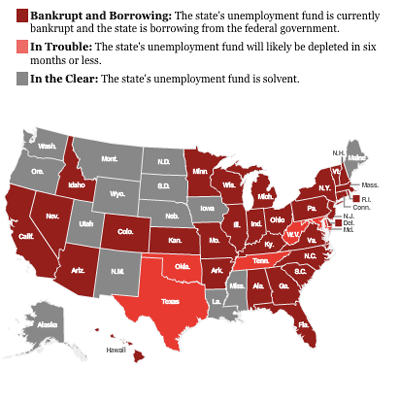
In the wake of two years of high unemployment, the number of unemployment insurance (UI) claimants in many states has remained very high, straining the funding of state UI programs.
 For the second consecutive year, the majority of states project their UI tax revenue will increase this year. The increases projected by states for 2011 range from 0.1% to 135.0%, with a weighted average state UI tax revenue increase of approximately 16.5%.
The most common ways this occurs is through some combination of an increase in experience rated taxes on employers, an increase in tax rates by moving employers to a higher tax schedule, and an increase in the taxable wage base. The first two increases are automatic, while increasing the taxable wage base can be either automatic through indexing or through legislation. Increases in tax revenue can also occur as the economy recovers and wages increase, even without a change in tax rates or taxable wage bases.
In addition to higher UI tax revenue, another consequence of increasing UI benefit outlays is that over 30 state unemployment trust funds are insolvent, requiring states to borrow either from the federal government or private capital markets.
To deal with this, many states have or will enact legislation addressing UI financing. In 2010, nine states enacted legislation that addressed UI financing; another 15 states expect to do so in 2011. In addition, seven states reported considering borrowing from the private sector to pay back their loans from the federal government. ◆