

Update On Health Care Mandate Delay And Repeal
On July 2, 2013, the Treasury Department and White House announced a one year delay for the employer mandate penalties and reporting requirements until 2015 in separate blog posts. On July 9, 2013, the Treasury issued Notice 2013-45 that officially provided transition relief for 2014 under §§6055 (§6055 Information Reporting), 6056 (§6056 Information Reporting) and 4980H (Employer Shared Responsibility Provision), but repeatedly encouraged employers to voluntarily comply next year.
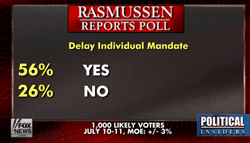 While transition relief may provide certain businesses extra time for compliance with the relevant sections, it neither solves the fundamental problems of the employer mandate nor provides much needed certainty to employers.
In the law, the employer mandate penalizes businesses with 50 or more full-time equivalent employees if they do not offer health insurance to full-time employees, or if certain full-time employees receive a tax credit to purchase insurance through the exchange. The requirements to determine employer size and workforce classification next year in order to prepare for 2015 are already discouraging employers from hiring employees and investing in their businesses. The employer mandate also establishes a powerful disincentive to hire more than 50 employees. Thus, it punishes both the employer and employees alike. While the employer will struggle with the costs of compliance and penalties, the employees will suffer lower wages and possibly job loss.
Proposed regulations published early this year to implement this mandate caused confusion among employers, increasing employer uncertainty as to the various ways to: classify and define employees; calculate the impact of the cumbersome requirement; and minimize the costs associated with compliance.
The proposed regulations added many new definitions and categories of employees and withheld other important requirements. Employers continue to await final regulations regarding the employer mandate.
Unfortunately, a temporary delay of the employer mandate does not fix the inherent problems of the provision. While it may give businesses one more year to prepare for compliance, businesses will not hire additional personnel or increase hours simply because the provision is delayed.
Fortunately, the temporary delay provides Congress further opportunity to remedy the fundamental problems of the employer mandate.