

Watch for These Labor, Employment Rollbacks
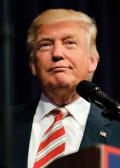 For nearly eight years under President Barack Obama, labor and employment practitioners have been kept busy by a host of new federal policies. With the election of Donald Trump and a Republican majority in both the Senate and House of Representatives, some of these policies may not last.
“There’s no doubt that this was a historic election, in not only the political sense, but in its implications for employers and employees,” said Mark Kisicki, who represents employers through his work at Ogletree Deakins.
In the days immediately after the election, we learned it was likely that the Affordable Care Act would be repealed. The DOL’s overtime also got quick attention as a candidate for a rollback. (See story on page 8.)
Take a look at other initiatives that could change in a Trump administration.
The Fair Pay and Safe Workplaces order, which requires companies to disclose data about labor violations as part of the bidding and selection process for federal contracts, was slated to take effect Oct. 25 but is partially enjoined nationally by a preliminary injunction from a Texas federal court. Under the order, companies would be forced to disclose any adverse findings from courts and agencies under 14 federal labor laws and their state equivalents with a three-year lookback period, even if the case remains under appeal or unresolved.
Steven Suflas, a partner in Ballard Spahr’s Denver and Cherry Hill, New Jersey, offices, believes that the order, dubbed the “blacklisting rule” by detractors, is the most likely executive order to get eliminated after the inauguration.
The National Labor Relations Board standard on joint employment, recently modified, is another candidate for modification or elimination, labor and employment lawyers say. The NLRB decided in August 2015 that a relationship between one company and another need not involve direct control—only “indirect control”—for the two to share liability for one company’s labor and employment violations as joint employers.
The new NLRB standard, which was echoed by the Department of Labor in its own January 2016 joint employer guidance, has raised the ire of employers and elected leaders. Even before the election, Republicans in Congress drafted legislation to dismantle the joint employer rule.
Attorneys say that the NLRB’s so-called “quickie” union election rules could also be overturned during a Trump administration. These rules, which went into effect in April 2015, have tightened the timeframe between the filing of a petition to unionize and a union election.
There may be less motivation to overturn these rules than others, however, as employers’ fears that they would greatly increase the union win rate were not realized. The Wall Street Journal reported earlier this year that even though the time from petition to election is faster—
dropping from about five weeks on average to three weeks—the actual union election win rate hasn’t changed significantly.
Marcia Goodman, a partner at Mayer Brown in the firm’s Chicago office, said President-elect Trump will face the challenge of balancing populist campaign promises to support working people with pro-business Republican values. She suspects “more structural and less obvious” policies, such as mandatory arbitration agreements, are likely targets for change.
Over the last few years, Obama’s NLRB has challenged agreements between companies and workers that require all employment-related disputes to be settled in arbitration. The board and other plaintiffs have argued that the right to litigate in these cases is covered by the National Labor Relations Act.
An NLRB under Trump could curry favor with businesses by no longer pursuing these cases. “If they were to stop taking a position on arbitration agreements, that would have a big impact on the workplace and on employers,” Goodman said. “It seems to me that could well happen.”
Source: National Law Journal